Job Anderson
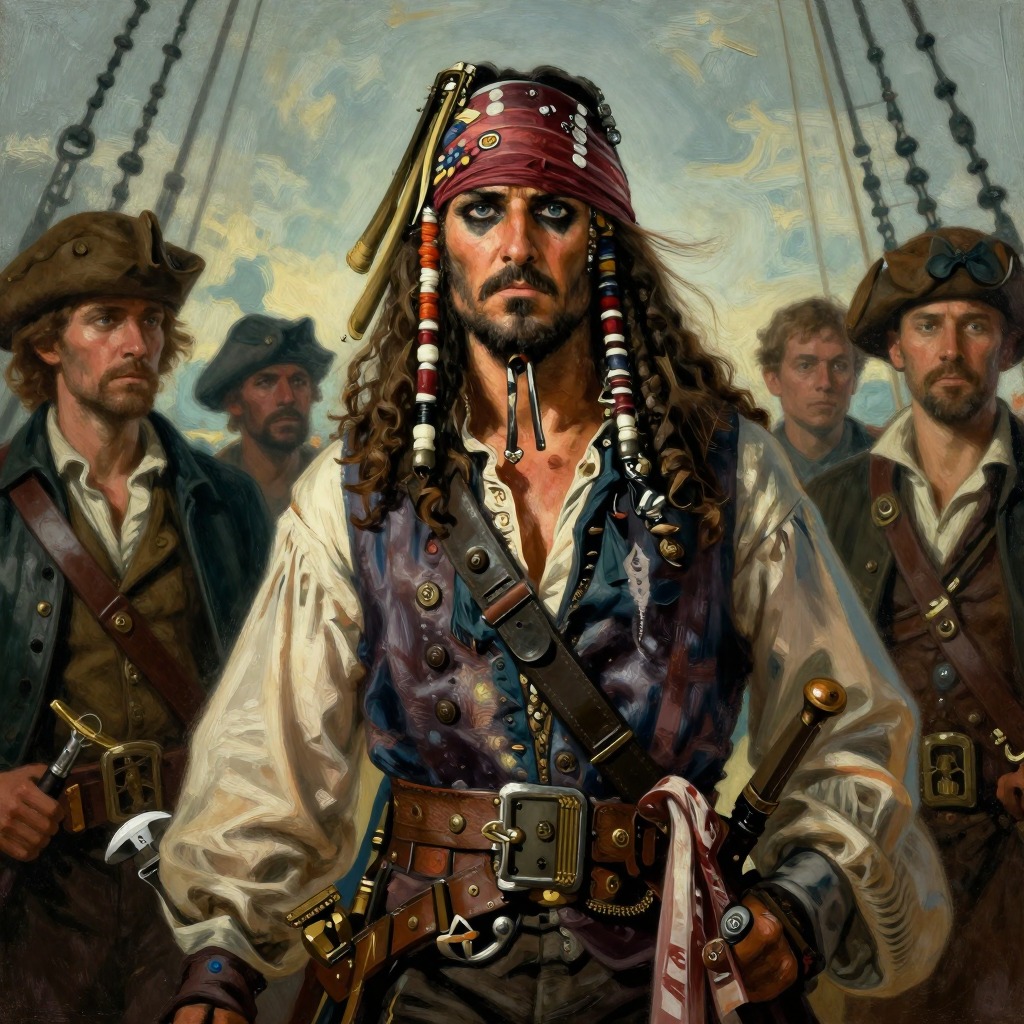
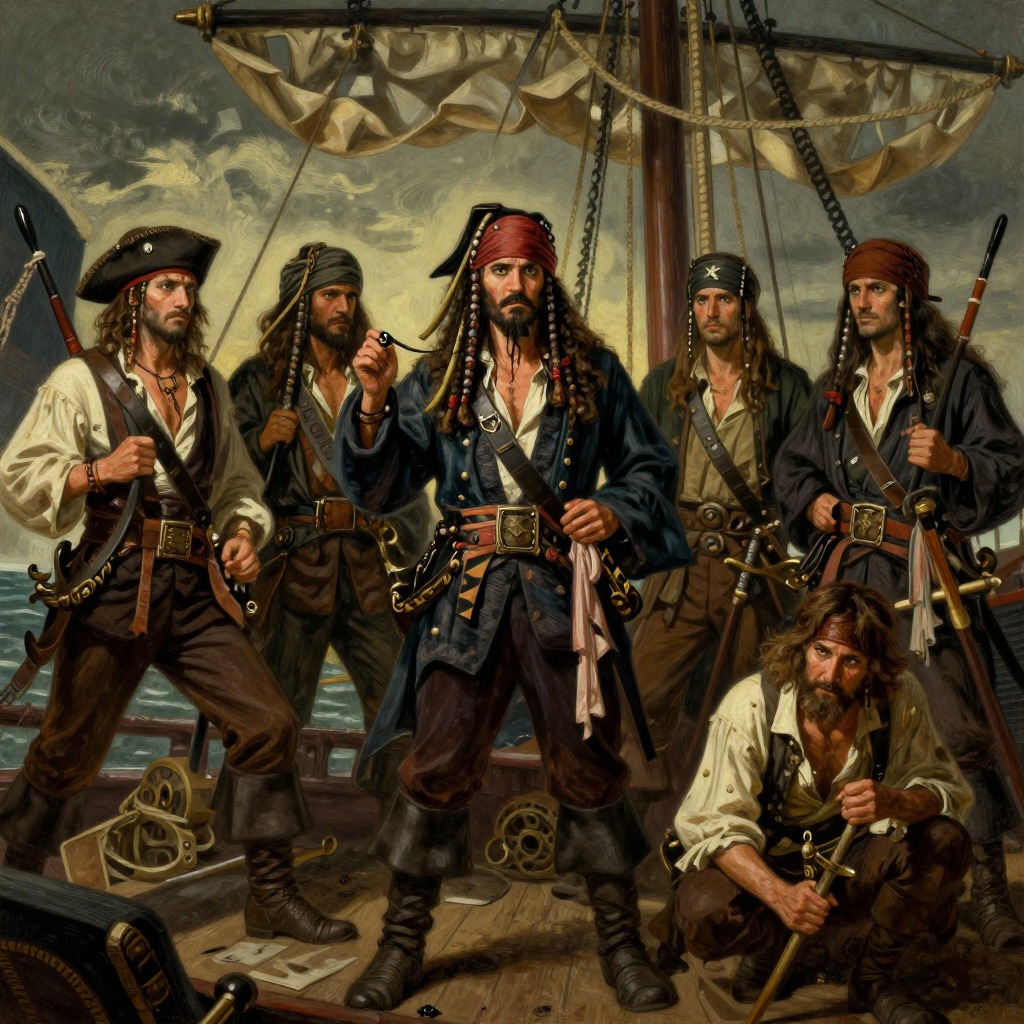
Job Anderson is the boatswain of the Hispaniola and one of the most dangerous figures among the mutineers. A physically powerful and aggressive seaman, he is promoted to serve as mate after the disappearance of Mr. Arrow, and he becomes a key lieutenant to Long John Silver in the conspiracy against the ship's officers. His role in the mutiny is defined by direct violence and command presence, making him a central antagonist in the struggle for control of the ship and the treasure.
Identity and Role
Anderson is introduced as the boatswain, a senior petty officer responsible for the crew's discipline and the ship's rigging. When Mr. Arrow, the original mate, vanishes overboard during a drunken stupor, Anderson is advanced to fill the role, though he retains his old title. He is described as "the likeliest man aboard" for the position, indicating his competence as a seaman. However, his loyalty is to the mutineers, not to Captain Smollett. During the voyage, he is noted for grumbling loudly alongside the worst of the crew when the ship is becalmed off Treasure Island, a sign that the discipline of the crew is already fraying. His physical strength and aggressive demeanor make him a natural leader among the rebellious hands.
Role in the Mutiny
Anderson is a central figure in the mutineers' plans. He is present at the council of war when Silver outlines the conspiracy, and he is one of the men who openly defies the captain's authority. When the loyal party abandons the Hispaniola and takes refuge in the stockade, Anderson leads the first assault on the fortification. He is at the head of seven mutineers who charge the stockade from the southwestern corner, and it is his voice that roars "At 'em, all hands—all hands!" as the pirates swarm over the palisade. During this attack, he personally wounds Captain Smollett, firing the ball that breaks the captain's shoulder-blade and touches his lung, a grievous injury that puts Smollett out of action for the remainder of the conflict.
Death in Battle
Anderson's end comes during the decisive fight at the stockade. After the initial volley, he and three other pirates breach the defenses and engage the loyal party in close combat. Jim Hawkins, fleeing from Anderson, rolls down a slope in the soft sand, but the boatswain is intercepted by Abraham Gray. Gray, who had recently defected from the mutineers, cuts down Anderson with a single blow before the big boatswain can recover from his last strike. Anderson's death is a turning point in the battle, as it removes the most physically formidable of the pirates and demoralizes the remaining attackers. His body is left among the five fallen pirates, four inside the palisade and one outside, marking the end of the most serious threat to the stockade's defenders.
Narrative Significance
Anderson represents the brute force and undisciplined violence of the pirate crew. Unlike Silver, who relies on cunning and manipulation, Anderson is a straightforward enforcer, leading charges and issuing threats. His death at Gray's hands underscores the theme of loyalty and redemption: Gray, a former mutineer who chooses to follow his captain, proves his worth by defeating the man who embodies the rebellion's physical power. Anderson's role also highlights the internal divisions among the pirates, as his aggressive tactics contrast with Silver's more cautious, strategic approach. His demise, along with the other casualties of the stockade battle, reduces the mutineers' numbers from nineteen to fifteen, shifting the balance of power and setting the stage for the final confrontation over the treasure.